De La Salle University
The beauty of grad school is your coursework is based on your taste, you can decide to work on hard complex topics for fun as long as it’d survive the scrutiny of your professor, while fulfilling the criteria in your coursework.
- IT Service Management: ---
- Advanced Operating Systems and Networking: We had fun tasks like designing an AI infrastructure for a business. Notable exercises too mostly with Docker containerization and analyzing network packets. My project was developing an Operating System from scratch and presented it live in class to a group of senior engineers and solution architects. My professor later highlighted it in her recommendation letter for a graduate study, tho in the end I decided to defer that application to finish my current studies
- Information Systems Architecture: cool groupwork where we were tasked to present a lecture on service-oriented architectures, then review the microservice architecture docs of Cambridge Core.
- Advanced Systems Design: we explored different stages of the design process in software engineering. For coursework, I did system design with AWS, focused on the design of a search engine deployed to AWS. Then for the final project, I designed an e-commerce-like system
- Shared & Collaborative Systems: research-oriented class, mostly exploring the design of various tech products from a human-computer interaction (HCI) and business perspective. My project was extending LLM-based misinformation simulations into a governance digital twin for shared collaborative systems, basically designing an AI agent governance platform
- Project Management: loads of case studies. I didnt get much out of it because the class time coincided with my work hours. A massive shame as the course offered PMBOK certifications.
- Machine Learning:
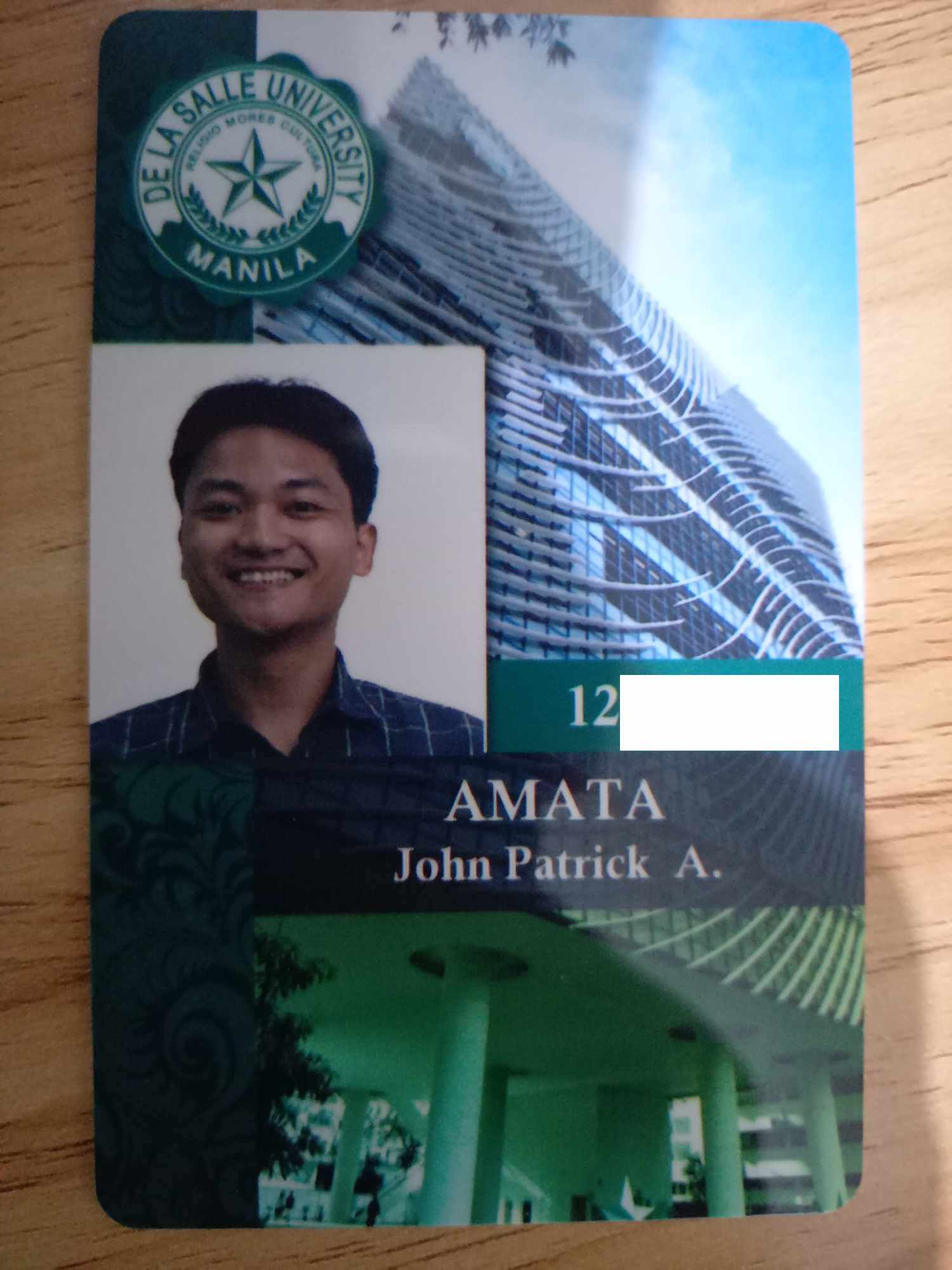
my goofy ID
Soon…
The next step after my education at DLSU is to take, a 2nd or more masters. Part-time? Or Full-time at another country? Who knows, but my father took 2 master’s while working a demanding senior leadership and a business